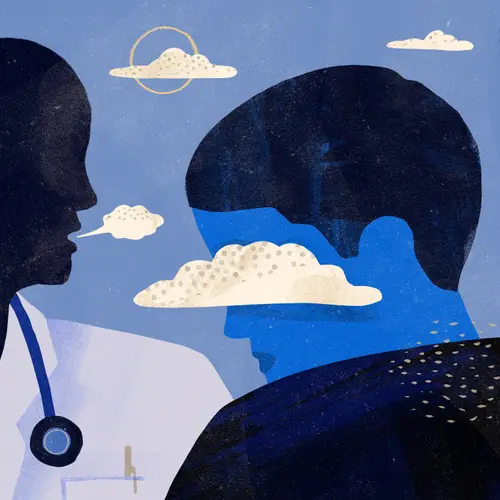
Ketamine is a dissociative medication that blocks N-methyl-D-aspartate (NMDA) receptors. NDMA receptors are involved in pain signaling, memory, and consciousness. At higher doses, doctors use it to put you to sleep before surgery. At lower doses, it results in a temporary sense of detachment that researchers believe can effectively treat depression in people who haven’t responded well to other treatments.
The FDA has approved only one form — the nasal spray esketamine — and only for treatment-resistant depression, making it far from a mainstream treatment option.
Still, for people with treatment-resistant depression, it’s an option that may be worth discussing with your doctor. But it’s not for everyone.
Is Ketamine Right for You?
So when is it time to consider ketamine as an option? Typically, after you have tried several other therapies and they haven’t been effective, says Boris Heifets, MD, PhD, associate professor of anesthesiology, perioperative, and pain medicine at Stanford University School of Medicine.
And even then, it’s not a given that you should try it, Heifets says. One problem is that ketamine has the potential for abuse. Your doctor will assess your risk profile before prescribing esketamine or any other ketamine treatments off-label, and will also assess you after each dose.
In addition, doctors typically avoid prescribing ketamine for depression if you have a history of psychosis, schizophrenia, or substance use disorder. Teens, pregnant and breastfeeding people, and elderly people with dementia should also generally avoid using ketamine to treat depression.
Be sure to go over your medical and mental health history with your doctor. Mention any history of alcoholism or substance use disorder. Other major health issues should also be discussed.
“Ketamine can have a number of physiological effects, and we want to check for things like unstable heart disease, stroke, anything that might pose a risk,” Heifets says.
How do I take ketamine?
Right now, ketamine is primarily offered in doctors’ offices via the medication esketamine. Esketamine is a nasal spray. You spray the medication into your nostrils under the supervision of a doctor or nurse.
You can take esketamine by itself or alongside other antidepressants. The FDA requires that people with suicidal ideation who take esketamine for depression take it in combination with an oral antidepressant.
When you take esketamine, you have to stay at your doctor’s office for at least a couple of hours after taking a dose to allow major side effects to ease. You’ll need someone to accompany you home, and you can’t drive or operate machinery until the next day.
Ketamine IV infusions and injections are available in some private clinics and occasionally for at-home administration. Oral versions of ketamine, like lozenges, also exist. However, none of these forms of ketamine have been approved by the FDA to treat severe depression, and they are not typically covered by health insurance.
How long and how often will I need to take ketamine?
The frequency and length of your treatment will depend on the form of ketamine you’re taking and your doctor’s recommendations.
For esketamine, your doctor will typically start you out with twice-weekly doses during the first month. After that, your doses will likely get less frequent as you work with your doctor to see whether esketamine is effective for you and how best to use it.
Ketamine treatments used off-label may differ in timing. Ketamine IV infusions, for example, may require a couple of infusions per week during the first two months. Work with your doctor to determine an appropriate dosing schedule for you.
Can I take ketamine at home?
Right now, most health insurers only cover in-clinic administration of the drug esketamine, which is the only form of ketamine FDA-approved for depression. You cannot take esketamine at home.
But some doctors prescribe other forms of ketamine, such as lozenges and IV infusions, to treat depression at home on an “off-label” basis. Off-label means the medication is legal and requires a prescription, but it has not been FDA-approved for that specific use — in this case, depression.
Because these uses aren’t FDA-approved, most insurance plans won’t cover them.
What side effects should I expect with ketamine?
Effects may set in within seconds to minutes of use. They can last for hours after that. Most people experience mild, temporary symptoms.
“You might feel like you’re floating out of your body, or things kind of look flat, or time is doing strange things,” Heifets says. “You would typically wait out those effects.”
Side effects may include:
- Mental disconnection or dissociation
- Diminished mental capacity associated with drug use, or intoxication
- Drowsiness
- Headaches
- Upset stomach, dizziness, and vomiting
- Heightened anxiety
- Blurry vision
- High blood pressure
When will I see results from ketamine treatment?
When you take ketamine as treatment for severe depression, you may feel positive results as soon as 40 minutes after a dose. That’s a big difference when compared to other common antidepressant treatments that can take over a month to show effects.
“What has been missing in the mental health field is something that acts much faster, and that is where ketamine really made its mark,” Heifets says.
Studies have found that ketamine can be effective for depression for up to several months when used alongside another antidepressant treatment. A 2022 randomized controlled trial published in the BMJ found ketamine reduced severe suicidal thoughts within days — though it did not reduce actual suicide attempts compared to standard care.
Ketamine won’t cure your depression long-term. Nor is it used as a long-term management strategy. It is considered a relatively short-term treatment option for now.
Keep in mind, ketamine will not have the same effects on everyone. Your body is unique and may respond to ketamine in different ways.
If you try ketamine for depression, make sure to carefully assess your side effects and symptoms with a doctor before and after each dose to measure progress.
Can I get addicted to ketamine?
Ketamine can be addictive. There is also a risk of unintended overdose. This is especially true if you take ketamine outside of a supervised medical setting.
You may be at a higher risk of ketamine addiction if you have a past history of substance use disorder.
Ketamine Insurance Coverage: Step-by-step
Esketamine is the only ketamine treatment approved by the FDA specifically for depression. Many health insurance providers will cover esketamine if you meet treatment standards and show you have already tried several other depression treatments without success.
The cost of your treatments will depend on your personal health insurance coverage, and it can take a while to process a ketamine prescription, as it usually requires prior authorization. Here are the steps you can take to ensure coverage:
Ask your doctor for a referral. If you’ve tried multiple depression treatments but nothing’s working, consider asking your doctor about ketamine. Together, you can decide whether you may be a good fit. Your doctor can write you a referral to start the process with your health insurance.
Gather your documents. You’ll need to show you’ve already tried other antidepressant treatments to get ketamine approved for your depression. Check your medical records and call your doctor’s office to collect visit notes, medication lists, and other items that will support your case. Your doctor can help you organize everything required for the prior-authorization process.
The prior-authorization process. Your doctor will need to show that your esketamine treatments meet the standard of “medical necessity” to get the medication approved. For esketamine, this means you can show that you have a history of resistance to multiple other antidepressant treatments. You may also be covered if you have depressive symptoms and an acute risk of suicide.
If your request for coverage is initially denied, work with your doctor to submit an appeal. Your doctor will likely draft an appeal letter with additional information to help your case. Prior authorizations may initially get denied for many reasons. For example, you may need to include more information about your case, correct errors, or submit the request for coverage under a different health insurance benefit category. Occasionally, your doctor may need to request an exception to your health insurer’s formulary if esketamine is not listed as a covered medication.
Get treatment. Once you are approved for insurance coverage, call your health insurance provider. It is helpful to find out whether your esketamine visits will be covered under a pharmacy, medical, or behavioral health benefit. Your insurer can also help you understand the costs of treatments, as well as where there are nearby clinics in your coverage area.
If you can’t get insurance coverage
If your health insurance refuses to cover esketamine treatments for your depression or if you don’t have health insurance, you may have other payment options. Spravato, the FDA-approved esketamine medication currently available, offers a variety of payment assistance programs. Your state may offer health insurance or pharmaceutical payment assistance programs. If you have Medicare, you may also be eligible for certain payment assistance options.
Is Off-Label Use of Ketamine Safe?
Ketamine is a Schedule III controlled substance in the U.S., so it always requires a prescription regardless of the form or usage. That applies to IV infusions at private clinics, compounded nasal sprays, lozenges, everything.
Be careful when considering taking ketamine treatments on your own. Always talk to your doctor before proceeding with off-label use of ketamine.
“A lot of people use drugs for a variety of reasons, sometimes to self-medicate, but it can lead to some very bad outcomes,” Heifets says. “The value of using it in a medical setting is that you have someone who is at least monitoring your use, looking for patterns of escalating use, and looking for patterns of diminishing efficacy.”
Since esketamine has been approved by the FDA, it is highly regulated to help lower ketamine-related risks. Those regulations specify that you have to take esketamine in a medical clinic and be monitored by a medical professional when you receive a dose. If something goes wrong, your doctor is required to report it.
Other ketamine treatment methods that do not yet have FDA approval may be available to you, but they are often not well-regulated. One common option is at-home ketamine dosing accompanied by telehealth supervision by a doctor. Though convenient, this method has led to many accidental overdoses.
If you decide to try ketamine on your own, do your research beforehand and ask questions.
“There’s a risk-benefit to any treatment,” Heifets says. “The more powerful a treatment is, by definition, the more capable of harm it is.”
Other Treatment Options
There are other options out there for people with treatment-resistant depression.
ElECTroconvulsive therapy (ECT). It uses electrical currents to induce a brief, controlled seizure under general anesthesia. Typically administered in multiple sessions over several weeks, it is one of the most effective treatments available for severe, treatment-resistant depression.
Transcranial magnetic stimulation (TMS). It doesn’t require anesthesia. It uses magnetic fields to stimulate nerve cells in certain parts of the brain. Your doctor will attach an electromagnetic coil to your scalp to deliver the magnetic pulses. The procedure may help improve your mood and ease your depression symptoms.
Deep brain stimulation (DBS). In DBS, wires are surgically implanted in your brain to help disrupt signals linked to depression.
Different forms of professional talk therapy — cognitive behavioral therapy, dialectical behavioral therapy, psychodynamic — can also be effective for people with depression. These are often used alongside other treatments such as ketamine.